
After graduating, the biggest challenge for a student is getting placed. As a fresher, breaking into the job market has become tougher day by day. Only having a good academic record or degree is not enough now; students are struggling to find a job that matches their interests, skills, and long-term career goals.
Traditional hiring methods have also changed; HR professionals are no longer just looking for technically proficient candidates, but also those who possess strong soft skills. This is where role mapping for freshers changes the scenario in the market: easy skill assessment and role fitment allow students to evaluate their skills and obtain a scorecard to present to HR.
So, in the age of stiff competition for talent, structured role mapping is no longer a choice but an imperative for clarity and growth in a career. TBD Campus explain the steps to role mapping and helps freshers to land the right jobs based on their strengths, aptitude, and potential.
Why Degrees Alone Are Not Enough
For a long time, academic degrees were enough to get employment, but the current job market paints a different picture. Nowadays, employers are more attentive about job readiness, skills, and role fitment than academic degrees. This trend has further increased the struggle for freshers to find a job, as they are left confused about which jobs they are best suited for Freshers apply for jobs without knowing what the job entails, resulting in continuous rejection or job dissatisfaction early on. Role mapping fills this gap by aligning education with actual job roles.
Also Read:- Common Resume Mistakes Students Make & How to Fix Them
What Is Role Mapping?
Role mapping is a methodical process that helps individuals to discover the job roles that align with their skills, interests, personality, and career goals. In short, career mapping is the process that fills the gap between what a fresher can do and what the job market demands. Instead of choosing a job role based on trends and social influences, role mapping helps individuals make informed decisions. It evaluates technical and non-technical skills to discover job roles where a fresher can succeed.
Why Role Mapping Matters for Freshers
Role mapping is an important process that can increase the employability of freshers. The most significant benefit of role mapping is that it helps in accurate job matching, which reduces the need for testing and error while searching for a job. When freshers apply for job roles that match their skills, there are greater opportunities of getting a job. Additionally, role mapping helps to build confidence in freshers to make informed decisions about their career paths.
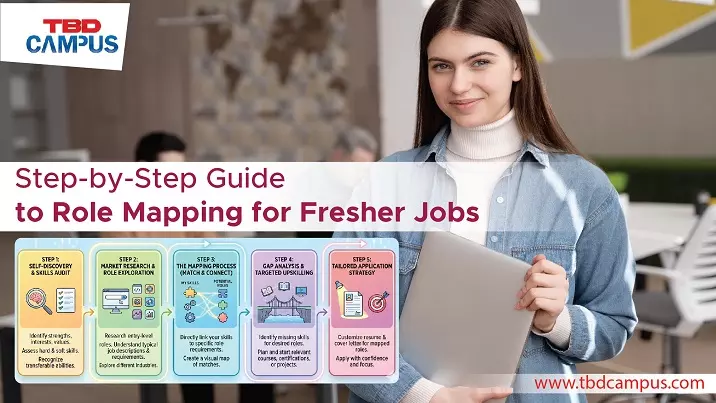
Step 1: Skills & Interest Assessment
Self-assessment is the first step in effective role mapping. This includes technical skills, like coding, data analysis, or design, and soft skills like communication, problem-solving, and teamwork. Also, a structured skills assessment includes an evaluation of personal interests, work preferences, and learning styles. Others with a fresher look can do better in innovative or interpersonal job roles. This stage sets the ground for beneficial career decisions.
Step 2: Matching Skills With Job Roles
Once skills and interests are clearly identified, the next step is mapping them with relevant job roles. The primary focus at this stage is on job requirements and job role fit. For a fresher with skills like logical thinking and a basic understanding of programming, it is better to align them with job roles such as a business analyst, junior developer, etc., rather than expertise in random job profiles. Thus, job roles are selected or defined based on skill-mapping so that candidates can apply to jobs that are expected of them by the employer.
Step 3: Skill Gap Identification
Even when a fresher identifies a suitable role, there are often gaps between existing skills and industry requirements. This is where skill gap analysis becomes important. Identifying these gaps helps freshers understand what they need to learn or improve before entering a role. Instead of feeling underqualified, candidates gain a clear learning roadmap. Upskilling becomes more focused and time-efficient, making freshers job-ready faster and more effectively.
Also Read:- How AI-Based Skills Assessment Transforms Campus Placements
How TBD Campus Automates Role Mapping
While traditional role mapping requires manual assessment and guidance, platforms like TBD Campus have transformed the process using technology. TBD Campus uses AI role mapping to analyse a fresher’s skills, aptitude, and interests through intelligent assessments. Based on this data, the platform recommends the most suitable job roles along with readiness scores. It also highlights skill gaps and suggests targeted learning paths. This automated approach removes guesswork and provides freshers with data-driven career clarity.
Conclusion: Choose Roles That Fit You
In today’s dynamic job market, success depends on making informed career choices early. Role mapping empowers freshers to move beyond degrees and focus on alignment, readiness, and long-term growth. By understanding personal strengths, matching them with suitable roles, and addressing skill gaps, freshers can build meaningful careers instead of chasing random job titles. Career clarity achieved through role mapping leads to better job satisfaction, higher retention, and faster professional growth.
So, if you are looking for a platform for job role fit, sign up for TBD Campus, and get more than you expect!
Also Read:- Smarter Campus Placements Through Scientifically Powered Skill Assessment


Leave a Comment
0 Comment
Be the first one to comment!