
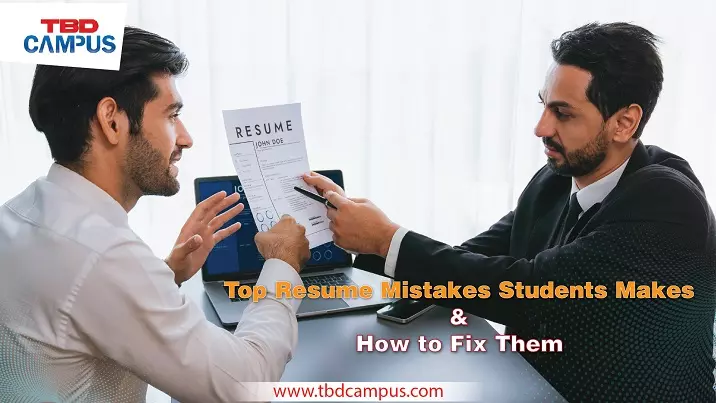
Building a resume can be quite challenging for the average college student, as it may be the first and, hopefully, the only impression the student makes on a recruiter. Nevertheless, despite having an appropriate educational background, many resumes are rejected at the initial screening. The message is rather straightforward—academic resumes just fail to communicate worth. Commonly, the recruiter has a quick review of the resume, and the unformatted, talent-lacking, or generic resumes will decrease your chances. The first step in creating a worthwhile resume is understanding where things may be going wrong.
Common Resume Mistakes Freshers Make
Job seekers, especially fresh graduates, often treat writing a resume as a mere formality in the job application process. They frequently use copied templates, write vague professional objectives, and include information that reveals little about their professional background. Instead of highlighting their skills and qualifications, the resume often appears unstructured and disorganised. Another common mistake is sending the same resume to different jobs, resulting in a lack of alignment with the specific business goals of each company.
Why Lack of Skills & Project Details Weakens a Resume
A resume feels incomplete without strong skills and detailed assignment descriptions. Students often list technical or general abilities but fail to explain how they've applied them. Recruiters aren't looking for perfection; they're looking to get to know you and see evidence of your work. Academic responsibilities, internships, certifications, freelance work, or self-initiated projects, when described honestly, can significantly enhance a resume. Without this context, skills appear incomplete and lack credibility.
Formatting & ATS Issues That Cost You Shortlists
Even the best-written resume can be disqualified if it does not go through the application tracking system. This may be the first place that the trouble really starts. Many students pay great attention to the graphics that make their resumes really interesting to the eye, but inaccessible to the computer. These include graphics, tables, and interesting fonts.
When this happens, important data points in a resume, such as skills, work experience, or keywords, cannot be identified. In this case, the resume never gets transmitted for review by a recruiter, no matter how good a candidate they have.
In summary, this means that bad formatting can remove your application before it's reviewed by humans.
How to Fix These Resume Mistakes
Revising your resume will not mean working on a new one. First, the readability should improve.
Turn lengthy, broad objective statements into a concise professional summary. Be clear about your educational background, skills, intern, projects, and college experience. Even your coursework, certifications, or other activities may indicate relevant knowledge with proper presentation.
Use bullet points whenever possible. Also, use action verbs. Use measurable results wherever possible. Keywords should be incorporated throughout your resume. This is in relation to the keywords identified in your resume. The most important thing is to tailor your resume to fit each job in relation to the requirements of the company.
Resume Examples: Before vs After
A resume posting that is written in poor style can often come across as general and forgettable. A well-formatted resume, on the other hand, directly reveals specialisation, impact, and accomplishment. When students change their focus from what they did to what they achieved, their resumes immediately look more professional. A small correction like that can actually help students improve their chances of getting shortlisted.
Why Resume Builders Deliver Better Results
Students have long struggled with the formatting and structure of resume composition. Online resume-building tools can resolve these dilemmas by providing resume templates approved by ATS systems.
These assist students in focusing on information rather than design, ensuring that the resume is recruiter-ready. The absence of clutter, correct use of headings, and optimal resume design improve resume effectiveness in screening systems because resumes are professionally made and perfectly formatted.
Your Resume Is Your First Interview
A resume is not just a piece of paper; it's your pitch. It decides whether to get an interview call or not, way before you get selected.
A good resume reflects your skills, potential, and preparation for the job market. A job profile could be presented in a manner that, with some tips to avoid common mistakes, might turn your resume into a powerful tool for your career.
Conclusion
A well-structured resume will unlock opportunities, while a poorly structured resume will silently close doors to opportunities. For students and freshers, it can be a great advantage if they know some mistakes while structuring a resume and how these mistakes can be turned into opportunities by fixing them. By laying emphasis on skills, projects, and structuring it as per ATS requirements, your resume can be more than a document—it can be a reflection of your potential.
Start your career journey on the right foot by spending your time today creating a strong resume!
Also Read:- How AI-Based Skills Assessment Transforms Campus Placements
Leave a Comment
0 Comment
Be the first one to comment!